
Showing posts with label Lao Language. Show all posts
Showing posts with label Lao Language. Show all posts
June 08, 2026
Free Lao language classes for Lao-American deportees

December 23, 2025
Learn Khmu language
Source: Greetings in Khmu, Khmu Language Channel
Loving this Youtube Channel that's helping to shine a spotlight on the Khmu language.
December 08, 2025
How one young man is helping his village make a living and revive an old tradition
Source: Code Lao Channel on Youtube, 2024
Follow along in this profile of Soukmixay "Aloukee" Khounladsuvannavong, who without much textile experience or money, was able to encourage villagers to take up textile weaving and help them earn a living.
March 10, 2025
Learn Lao sign language basics - greetings
Episode 10 ການທັກທາຍ Greetings
Source: ຫ້ອງຮຽນພາສາມືລາວ Lao Sign Language Learning Room, 2023
February 20, 2024
It's lap, not larb
By: Laoconnection.com, February 20, 2024
Since there is no international set standard of how to write Lao words into English, you'll often see many spelling variations of the same word. This is often dependent on who's writing and everyone seems to have their own way of writing it out - us included!

January 12, 2024
Very useful Lao/English Buddhist book
Title: Short Dictionary of Religious and Buddhist Terms Lao-English / ວັດຈະນານຸກົມນ້ອຍ ຄວາມເຊື່ອ ແລະ ພູດທະສາສນາ ລາວ-ອງກິດ
By: Patrice Ludwig / ເພັດ ລາດວິກ
Price: FREE

October 05, 2020
Learn Lao Language: End of Buddhist Lent

ຮຽນພາສາລາວອັງກິດ Learn Lao and English
ອອກພັນສາ End of Buddhist Lent
#LearnLao #LaoLanguage #Lao #Laotian #ລາວ
September 28, 2020
Learn Lao Language: The Basics - Months
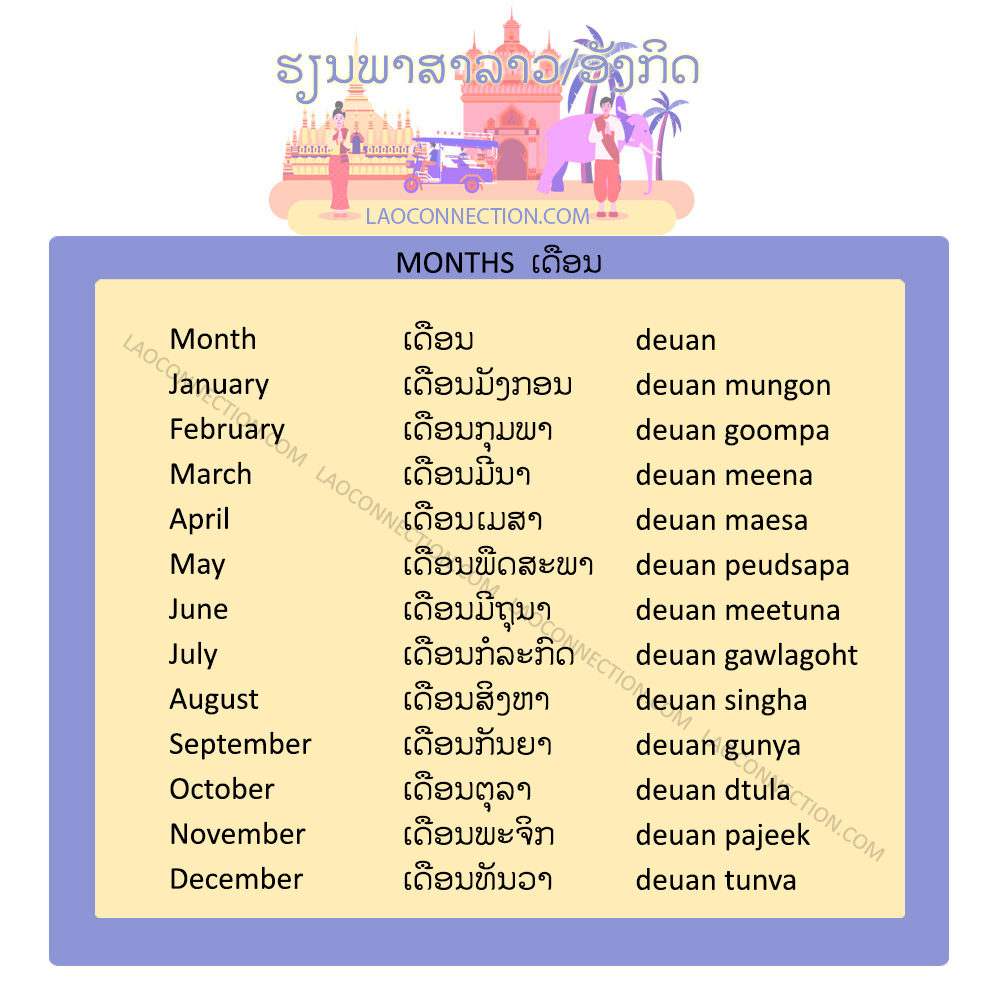
ຮຽນພາສາລາວອັງກິດ Learn Lao and English
ເດືອນ Months
#LearnLao #LaoLanguage #Lao #Laotian #ລາວ
September 24, 2020
Learn Lao Language: The Weather

ຮຽນພາສາລາວອັງກິດ Learn Lao and English
ອາກາດ The Weather
#LearnLao #LaoLanguage #Lao #Laotian #ລາວ
September 21, 2020
Learn Lao Language: Basics - Days of the Week

ຮຽນພາສາລາວອັງກິດ Learn Lao and English
ມື້ວັນ Days of the Week
#LearnLao #LaoLanguage #Lao #Laotian #ລາວ
ມື້ວັນ Days of the Week
#LearnLao #LaoLanguage #Lao #Laotian #ລາວ
September 11, 2020
Learn Lao and English: Clothing related words

ຮຽນພາສາລາວອັງກິດ Learn Lao and English
ເຄື່ອງນຸ່ງ Clothing
#LearnLao #LaoLanguage #Lao #Laotian #ລາວ
August 29, 2020
Elements of deity decorations in Lao Buddhist Art

Deities and Decorations ເທວາຮູບແລະເຄື່ອງປະດັບ
Drawing and descriptions by: Bounlerng Vernvilavong ບູນເລີງເວີນວີລາວົງ
August 18, 2020
Learn Lao and English: Describing Food Flavours

ຮຽນພາສາລາວອັງກິດ Learn Lao and English
ອະທິບາຍລົດຊາດອາຫານ Describing food flavours
#LearnLao #LaoLanguage #Lao #Laotian #ລາວ
July 19, 2020
Learn Lao and English: Mining and geology related words

ຮຽນພາສາລາວອັງກິດ Learn Lao and English
ການຂຸດຄົ້ນບໍ່ແຮ່ Mining
#LearnLao #LaoLanguage #Lao #Laotian #ລາວ
July 13, 2020
Learn Lao and English: Sports and exercise related words

ຮຽນພາສາລາວ/ອັງກິດ Learn Lao/English
ກິລາ Sports
#LearnLao #LaoLanguage #Lao #Laotian #ລາວ
June 27, 2020
Learn Lao and English: Fruits

ຮຽນພາສາລາວ/ອັງກິດ Learn Lao/English
Fruits ໝາກໄມ້
#LearnLao #LaoLanguage #Lao #Laotian #ລາວ
June 15, 2020
Learn Lao and English: Ways to ask "how are you?"

ຮຽນພາສາລາວ/ອັງກິດ Learn Lao/English
Conversation phrases - Ways to ask "how are you?"
#LearnLao #LaoLanguage #Lao #Laotian #ລາວ
June 02, 2020
Learn Lao and English: Culture Related Words

ຮຽນພາສາລາວ/ອັງກິດ
#LearnLao / English
Culture Related Words
#LaoLanguage
May 26, 2020

May 20, 2020
Let's talk tea - International Tea Day - May 21

ມື້ນີ້ ວັນທີ21ພຶດສະພາ ແມ່ນວັນສາກົນນຳ້ຊາ
Today, May 21, marks #InternationalTeaDay.
Let's talk tea in today's #LaoLanguage post.
#LearnLao #Laotian #Lao
Subscribe to:
Posts (Atom)